Bamboo Flooring Water Damage: How We Turned a $4K Repair Into a $35K Full Replacement
A real case study showing how expert documentation and industry knowledge can secure the full replacement your client deserves
When a home suffers water damage, it's stressful enough. But when that home has bamboo flooring, the stakes get higher. Bamboo is beautiful, durable, and eco-friendly — but prolonged exposure to moisture can ruin it.
Recently, WTR Restoration responded to a burst toilet tank line in Canyon Lake that caused severe bamboo flooring water damage. What started as a small $4,000 repair turned into a $35,000 full-floor replacement — and here's how we made it happen.
The Water Loss Incident
The burst toilet line impacted:
- Bedroom/Office (primary damage zone)
- Under-the-Stairs L-shaped Closet
- Entryway
Materials damaged included bamboo flooring, underlayment, baseboards, quarter round, and drywall.
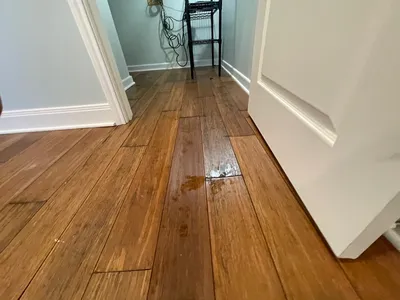
Water-damaged bamboo flooring in Canyon Lake home before WTR Restoration treatment
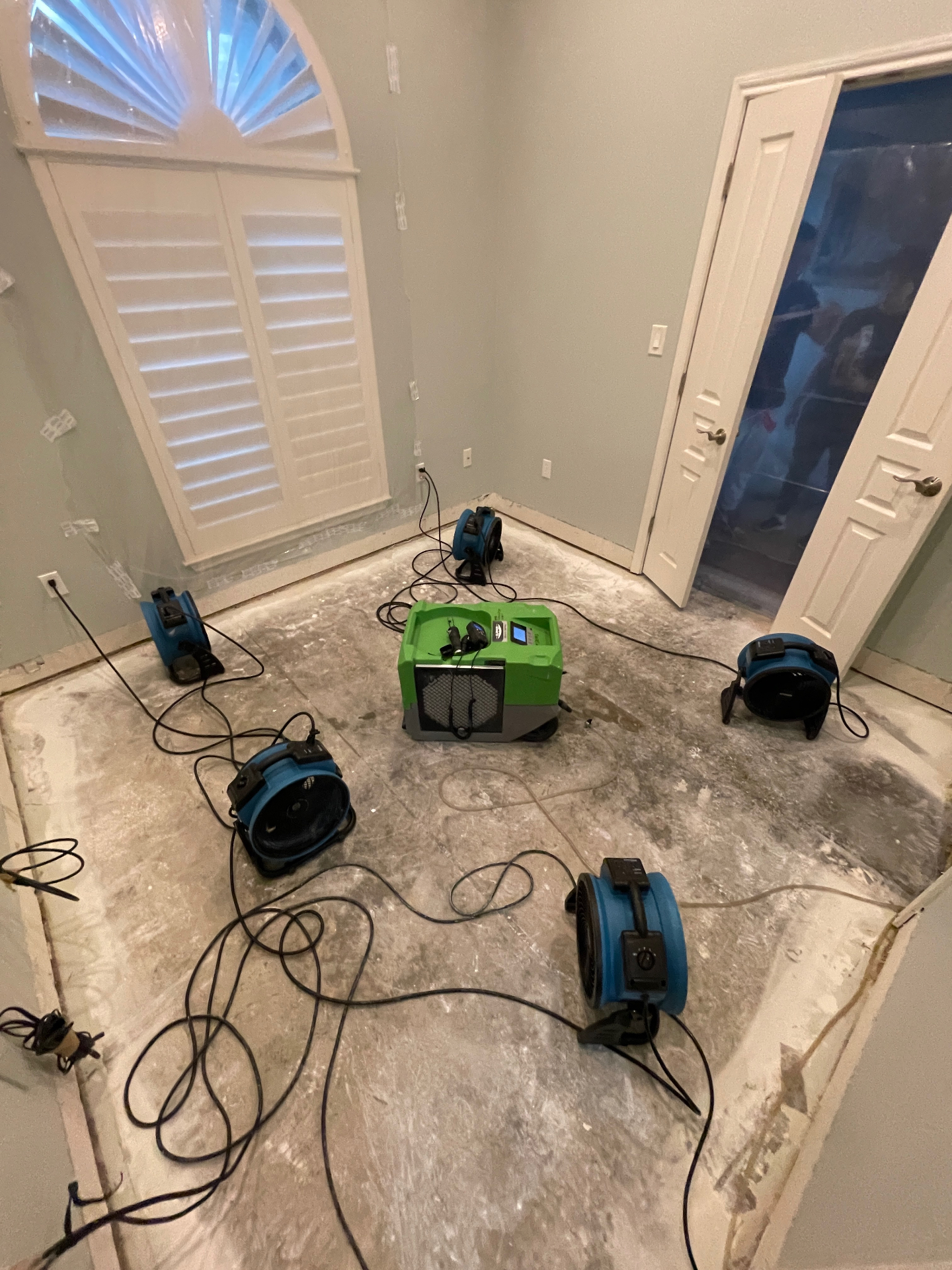
WTR Restoration drying equipment deployed in water-damaged Canyon Lake home
Initial Plan: Just Replace the Damaged Area
The insurance company's initial assessment called for replacing only the bamboo in the office and under the stairs — a small $4,000 scope of work. The rest of the home's floors were to remain untouched.
But here's the problem:
The original bamboo was discontinued, and the available replacement couldn't match in color, density, or quality.
Why Bamboo Flooring Needs Urgent Response
Bamboo is technically a grass, but it's processed into planks that act like hardwood. While it resists scratches well, it's still porous enough to soak up water — especially along the seams and cut ends. This leads to:
Swelling and Buckling
Boards expand and warp when moisture penetrates
Adhesive Failure
Water breaks down bonding agents
Mold Growth Under Planks
Hidden moisture creates health hazards
Permanent Discoloration
Water stains can't be reversed
Once moisture sets in, the affected boards have to go — and if you can't match the existing flooring, the only way to maintain a consistent look is a full replacement.
Step 1 – Moisture Assessment
FLIR Infrared Camera
Locate hidden moisture behind walls and under floors
FLIR MR77 Moisture Meter
Measure moisture content in all affected materials
Matterport 3D Scan
Capture complete documentation for insurance
Step 2 – Proving the Floors Couldn't Be Matched
We worked closely with Cali Bamboo to identify the correct replacement. The homeowners were particular — they'd lived with bamboo for years and loved it — so quality and color mattered.
To show the mismatch:
- We bought a box of Cali Bamboo from Lowe's for comparison
- Our contact at Cali explained Lowe's-supplied planks come from a different manufacturing facility
- Cali shipped us a box from the exact production run they'd use for the order, even setting aside 5,000 pounds of flooring
The Result:
When both products arrived, the difference was obvious: the Lowe's planks were 40% lighter and noticeably less dense. Even the direct-from-Cali planks couldn't match the original color exactly — meaning a seamless repair was impossible.
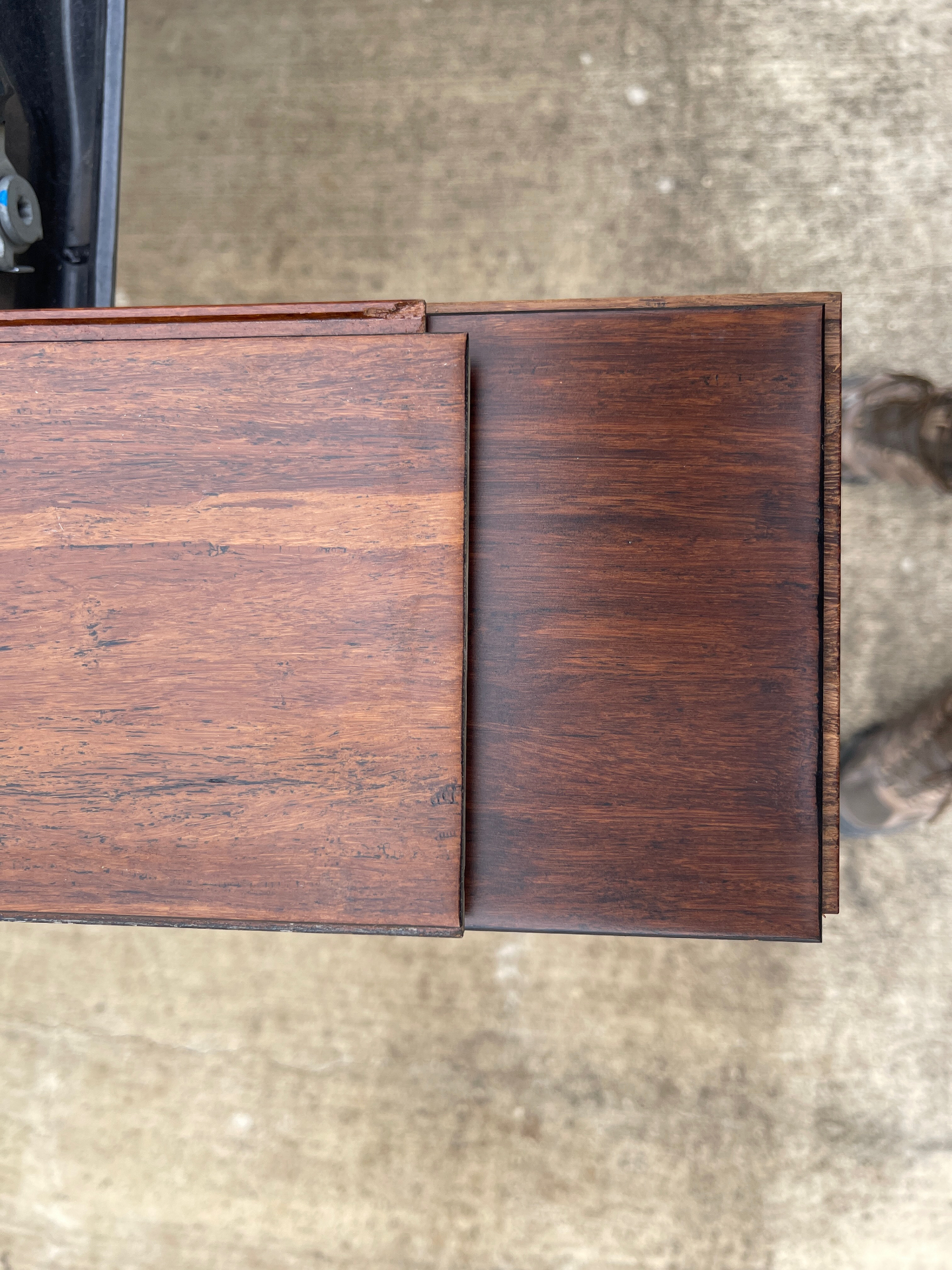
Visual proof: Color and density mismatch between original and replacement Cali Bamboo planks
Step 3 – Insurance Negotiation Win
Armed with expert analysis and side-by-side samples, we brought in a flooring expert to document the mismatch. We presented the findings to the insurance company, citing industry standards that require a uniform appearance after repairs.
Result:
They approved replacing all 1,500 sq. ft. of bamboo flooring throughout the home. The initial $4,000 repair scope became a $35,000 full replacement — exactly what the homeowner was entitled to.
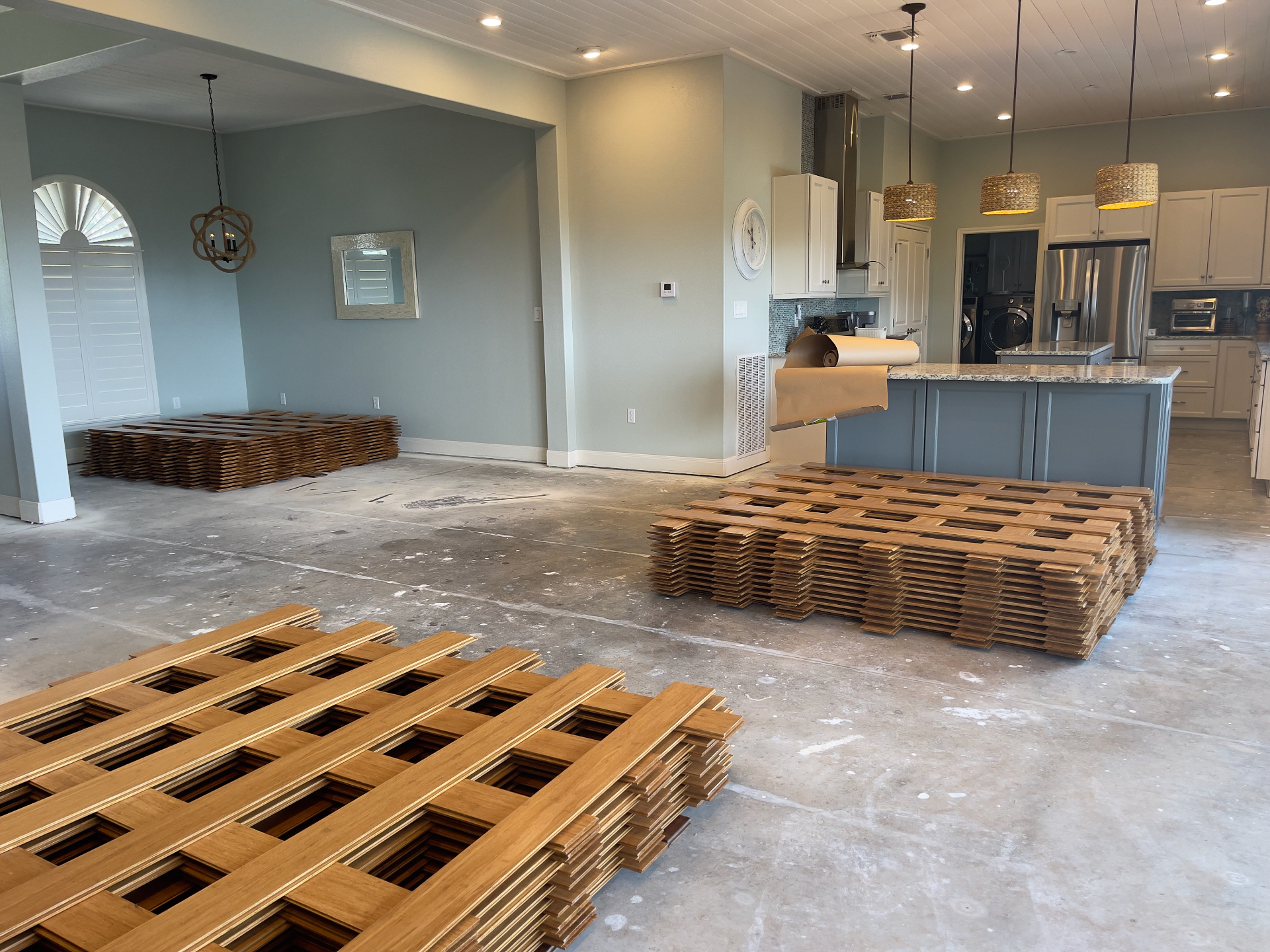
Stagger-stacked bamboo acclimating for 15 days in living room after demo - homeowners relocated during installation
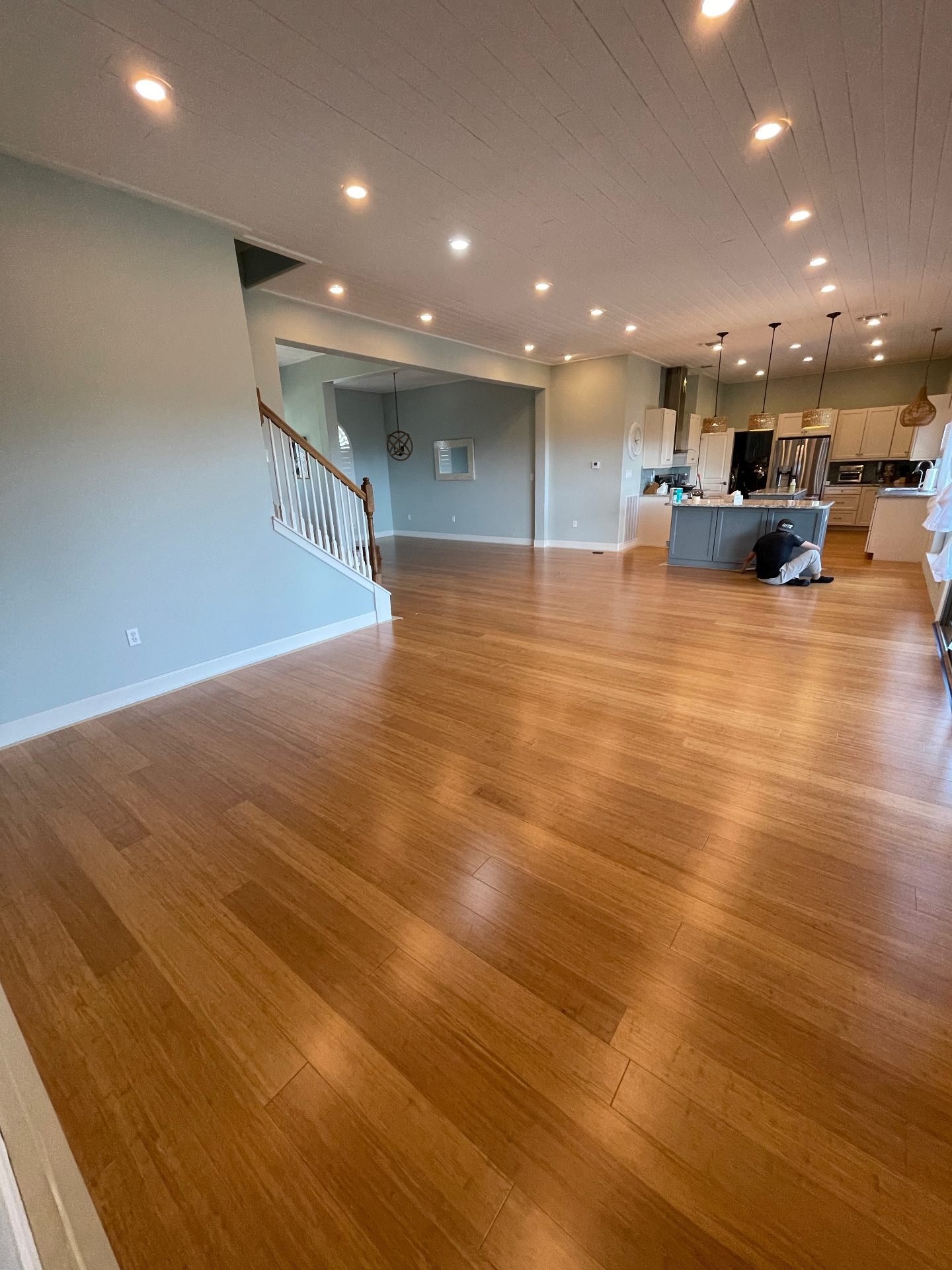
Final result: 1,500 sq. ft. of perfectly matched bamboo flooring by WTR Restoration
Experienced Bamboo Flooring Water Damage?
Don't settle for a partial fix. Contact WTR Restoration for expert assessment and full insurance claim support.